
Building type: Restaurant building Project stage: Condition assessment and proposed restoration planning
An aging TPO roof at a decision point
The roof inspection focused on an existing TPO roof serving a Jacksonville-area restaurant. The review documented field membrane condition, perimeter walls, coping, roof drainage and the details around rooftop equipment. The existing system was nearing the end of its typical service period, but the assessment did not treat age alone as the decision. It looked at whether the membrane could still be prepared and restored, or whether further deterioration would make a broader replacement conversation unavoidable.
For a restaurant, roof work has to account for operating hours, deliveries, rooftop equipment and the need to keep the building watertight while work proceeds. That makes a defined roof condition assessment more useful than a generic recommendation based on one symptom.
What the inspection found
The documented conditions included areas where the membrane had pulled away from the substrate, localized damage to the roof covering, debris that could interfere with drainage, and weathered flashing at walls and metal edges. Several of the conditions occurred at transitions rather than in one simple open-field location. Those are the places where roof materials, wall surfaces, coping and equipment supports meet, and where a repair must be detailed for the existing assembly.
The assessment also recorded the limitations of a visual roof walk. No core cuts, adhesion tests or destructive investigation were represented as complete. Those checks remain important before a restoration system or attachment approach is finalized.
Restoration was a possible path, not a promise
The inspection considered a silicone restoration system as a potential way to extend the life of the existing roof. That option depended on successful surface preparation and adhesion testing, correction of damaged membrane and flashing details, and cleanup of debris and contaminants. It was not presented as a coating that can be applied over every condition without further confirmation.
If adhesion, wet materials or widespread deterioration rule out restoration, the owner needs to understand that early. The value of the assessment is in making the decision criteria visible before a project is sold as a simple repair.
Drainage and perimeter details deserve their own scope
On this roof, coping, wall transitions and drainage components were part of the condition discussion. A roof can look serviceable across much of the field while water enters at a perimeter or stays trapped around an obstructed drainage point. Those details should be included in the scope, not left as an assumption after the roof field has been priced.
For a new project, the next step is to connect the roof observations to the restaurant's leak history, access needs and operating schedule. That gives ownership a path to choose between immediate repairs, restoration testing and longer-term replacement planning.
Roof conditions from the assessment
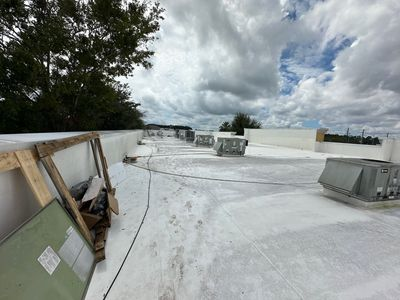
The white TPO field and rooftop equipment at the beginning of the assessment.
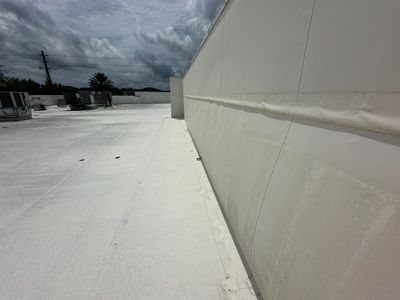
A raised wall transition where the membrane and flashing needed close review.
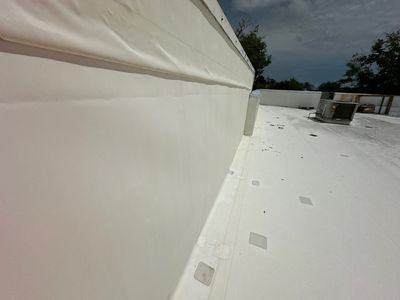
A raised area of membrane at the wall condition noted during the inspection.
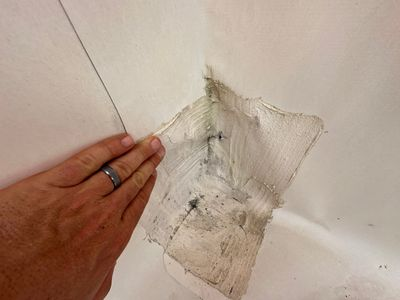
A localized opening in the existing roof covering.
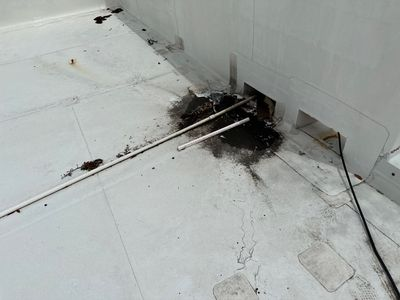
Debris collected at a low point beside the wall flashing.
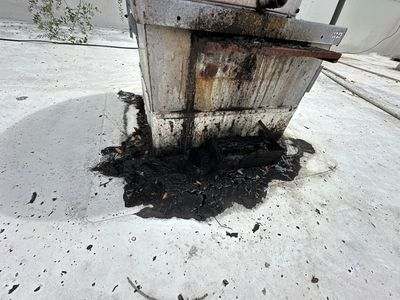
Weathered material and debris at a rooftop equipment curb.
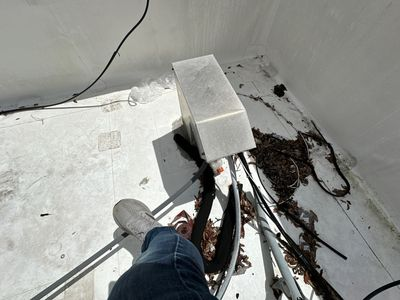
A penetration and adjacent roof surface reviewed as part of the condition assessment.
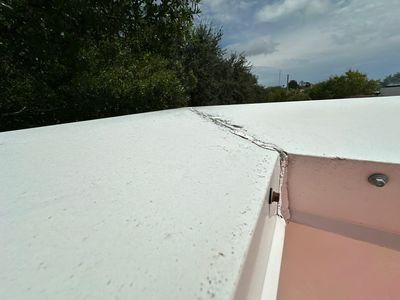
A coping seam and metal edge condition along the roof perimeter.
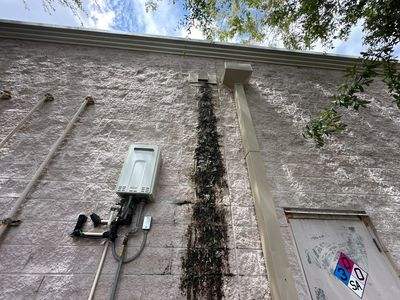
The vertical wall and roof transition seen from the exterior.
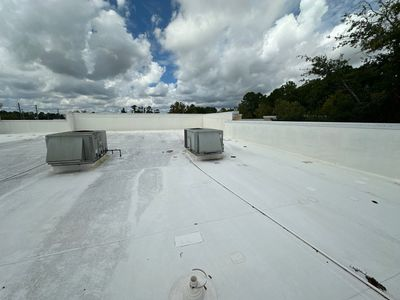
A broader view of the existing TPO roof, equipment and perimeter.
Plan restaurant roof work around the building
Share the roof's leak history, access limits, operating hours and any prior roof documents. We can identify what should be addressed immediately and what information is needed before a larger scope is selected.
Discuss a restaurant roof View roof projects